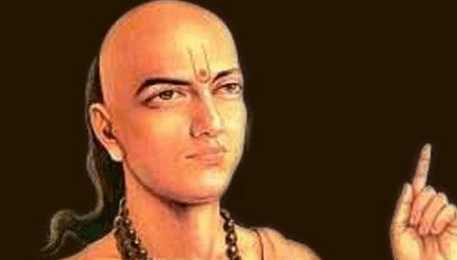
Aryabhatta (476 - 550 CE)
Aryabhatta is often regarded as one of the pioneers and key figures in the development of Indian mathematics, and he is sometimes referred to as the "father of Indian mathematics".
Aryabhatta was an ancient Indian mathematician and astronomer who lived during the Gupta dynasty, approximately between 476 and 550 CE. He is widely regarded as one of the most influential figures in the history of Indian mathematics and astronomy. Aryabhatta's contributions laid the foundation for significant advancements in these fields.
Aryabhatta was born in 476 CE in Ashmaka, possibly present-day Kodungallur in Kerala, India. Not much is known about his personal life, and historical records about the personal life of Aryabhatta are sparse and limited. While the absence of personal details leaves much unknown about Aryabhatta's daily life, his enduring legacy lies in the impact of his groundbreaking ideas and theories in the fields of mathematics and astronomy.
Aryabhatta's most renowned work is the "Aryabhattiya," a comprehensive text that covers various aspects of mathematics and astronomy. It is composed in 118 verses, each written in poetic form. These verses cover various aspects of mathematics, including arithmetic, algebra, and trigonometry, as well as astronomy, providing insights into Aryabhatta's profound understanding of these subjects. In the "Aryabhatiya," Aryabhatta addressed the measurement of time. He calculated the length of a year with remarkable precision, considering it to be 365 days, 6 hours, 12 minutes, and 30 seconds. His estimation was quite close to the modern value. His estimations were quite close to modern values. Aryabhatta provided calculations for the duration of a day, specifying that a day consists of 24 hours. He also offered insights into the varying durations of day and night at different latitudes.
Aryabhatta made significant contributions to the understanding of numbers and their properties. He introduced the concept of the decimal system, including the use of zero, well before it became widely adopted in other parts of the world. Aryabhatta also explored quadratic equations and provided methods for solving them. Aryabhatta's work delved into trigonometry, where he introduced the concept of sine and provided accurate trigonometric tables. His insights in this area were crucial for subsequent developments in astronomy. Aryabhatta made noteworthy contributions to astronomy, offering explanations for the motion of planets and the occurrence of eclipses. He proposed a heliocentric model of the solar system, with the Earth rotating on its axis and orbiting the Sun. The "Aryabhatiya" includes various tables related to astronomy, such as planetary positions. These tables were instrumental for astronomers in making accurate predictions and observations.
Aryabhatta's work significantly influenced the development of mathematics and astronomy in India and beyond. His ideas were transmitted to the Islamic world and later to medieval Europe, playing a role in the evolution of mathematical thought globally.
Aryabhatta is revered as a pioneering scholar, and his contributions have earned him a lasting legacy. There are various educational institutions and awards named in his honour in recognition of his profound impact on mathematics and astronomy.
While Aryabhatta's exact biography remains somewhat elusive, his mathematical and astronomical treatises have left an indelible mark on the history of science and continue to be studied and celebrated for their intellectual rigor and groundbreaking ideas.