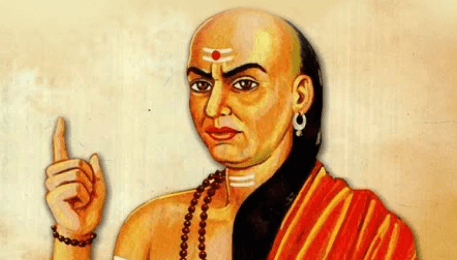
Chanakya (350 - 275 BCE)
Chanakya is widely regarded as ancient India's master strategist and is author of the Arthashastra, guiding principles of governance and economics.
Chanakya, also known as Kautilya or Vishnugupta, was a seminal figure in ancient Indian history, renowned for his roles as a statesman, philosopher, and the chief architect behind the establishment of the Mauryan Empire. Born into a Brahmin family around 350 BCE, he received his education at Takshashila (now Taxila), a prominent center of learning.
Chanakya's most notable achievement was his instrumental role in the rise of Chandragupta Maurya. Disillusioned with the ruling Nanda dynasty, Chanakya mentored and guided Chandragupta in overthrowing the Nandas, leading to the foundation of the Mauryan Empire around 321 BCE. As the chief advisor and prime minister, Chanakya was pivotal in consolidating the empire's vast territories, which stretched from the Himalayas in the north to the Vindhya Range in the south.
Philosophically, Chanakya is best known for authoring the "Arthashastra," a comprehensive treatise on statecraft, economic policy, and military strategy. This work delves into various aspects of governance, including the duties of a king, the organization of the state, and the conduct of diplomacy and warfare. The "Arthashastra" emphasizes realpolitik and pragmatic governance, advocating for a well-organized administrative system and a robust spy network to maintain internal stability and external security.
Chanakya's legacy is profound and enduring. He is often compared to Western figures like Niccolò Machiavelli for his strategic acumen and understanding of power dynamics.
His teachings have influenced Indian political thought for centuries, and his emphasis on a centralized administration and efficient governance laid the foundation for the Mauryan Empire's success. Modern India continues to honour his contributions, with institutions and regions named after him, such as the diplomatic enclave Chanakyapuri in New Delhi.
Chanakya's life and works exemplify the synthesis of strategic foresight, political wisdom, and philosophical depth, making him a cornerstone in the annals of Indian history.