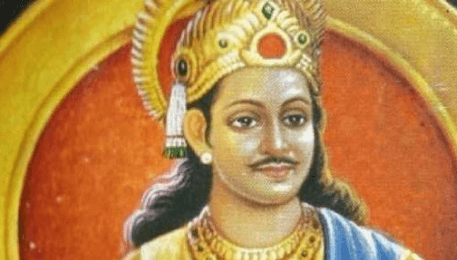
Chandragupta Maurya (320 BCE – 298 BCE)
Chandragupta Maurya, the visionary founder of the Mauryan Empire, unified most of India, laying the foundation for a prosperous and powerful nation.
Chandragupta Maurya stands as one of the most influential figures in ancient Indian history, renowned as the visionary founder of the Mauryan Empire - the first to unify most of the Indian subcontinent under a centralized administration. Born into a modest family, Chandragupta’s ascent to power was guided by his mentor, Chanakya (Kautilya), a master strategist and author of the "Arthashastra," a seminal treatise on statecraft and economics.
Chandragupta’s journey began during a period of political upheaval, following the retreat of Alexander the Great from northwestern India. Seizing this opportunity, Chandragupta, with Chanakya’s counsel, overthrew the Nanda dynasty around 321 BCE. He then embarked on a campaign of expansion, defeating Seleucus I Nicator - one of Alexander’s successors - and securing territories that extended the Mauryan Empire’s reach to the borders of Persia. By the end of his reign, Chandragupta’s empire stretched from the Himalayas and the Kābul River valley in the north and west to the Vindhya Range in the south, making it one of the largest empires in Indian history.
A hallmark of Chandragupta’s rule was his establishment of a highly organized and efficient administration. Drawing inspiration from the Persian Achaemenid model and the principles of the "Arthashastra," he divided the empire into provinces, each governed by appointed officials, and further subdivided these into districts for effective local governance. A council of ministers advised the emperor, ensuring centralized control while respecting regional diversity. The capital city, Pataliputra (modern-day Patna), became famous for its advanced urban planning, robust infrastructure, and vibrant cultural life.
Chandragupta’s reign ushered in an era of economic prosperity. The introduction of a unified currency system facilitated trade across the vast empire, while the construction of roads and irrigation systems boosted agriculture and commerce. The Mauryan Empire maintained a formidable standing army, which not only safeguarded internal stability but also deterred external threats, contributing to a period of relative peace and growth.
In his later years, Chandragupta embraced Jainism, influenced by the sage Bhadrabahu. He abdicated the throne in favor of his son, Bindusara, and retired to Shravanabelagola in present-day Karnataka, where he is believed to have fasted to death in accordance with the Jain tradition of sallekhana.
Chandragupta Maurya’s legacy is profound and enduring. He laid the foundation for an empire that, under his grandson Ashoka, would reach even greater heights and promote Buddhism across Asia. His administrative and economic reforms set a benchmark for governance in the Indian subcontinent, influencing countless generations and leaving an indelible mark on India’s historical and cultural landscape.